Food Traceability: the Priority for the Restaurant Sector in 2026 Between Sustainability, AI and New EU Rules
2026 marks a decisive acceleration for food traceability in the restaurant sector. Transparency, sustainability and digitalisation are no longer just “trends”, but fundamental requirements to compete.
Food traceability for restaurants in 2026 thus becomes:
- a response to the new European rules on food supply chains;
- a competitive advantage to increase trust and loyalty;
- a strategic lever to reduce waste and improve food cost;
- the foundation of automation and AI systems in the kitchen.
What Really Changes in 2026
1. New EU rules on supply-chain transparency
Regulatory pressure continues to grow: more detailed traceability, mandatory digital reports and increased scrutiny of high-risk ingredients.
This framework requires the adoption of advanced digital tools to ensure full traceability.
2. More demanding consumers
Industry research and analysis show that customers are increasingly attentive to:
-
the origin of raw materials;
-
allergens;
-
environmental sustainability;
-
authenticity of restaurant claims.
Making promises is no longer enough: in 2026 you must prove them.
3. AI enters kitchen processes
Digitalisation makes possible:
- anticipating consumption and orders;
- optimising stock and purchases;
- reducing food waste;
- improving dish profitability.
All this requires an efficient traceability system that feeds AI with reliable data.
New EU Regulation: What Changes and Why It Matters for Restaurants
European regulation on food traceability is undergoing an evolutionary phase which in 2026 will become increasingly relevant for restaurateurs. In particular:
- The Regulation (EC) No 178/2002 — known as the “General Food Law” — already establishes that all operators in the food chain must guarantee traceability of products “one step back, one step forward”. In practice an operator must identify the immediate supplier and the immediate recipient of each lot.
- Added to this is the strong push towards digital traceability: for example, for sectors such as fish products, Regulation (EU) 2023/2842 (Fisheries Control Regulation) introduces the obligation that “traceability data can be exchanged digitally at every stage of the chain” starting in 2026 for fresh and frozen goods.
- At the same time, the concept of a Digital Product Passport (DPP) is being introduced — under the Regulation (EU) 2023/XXXX – Ecodesign for Sustainable Products (ESPR) and other digital-transparency tools — which require that information on origin, composition, supply chain, production conditions and environmental impact of products be accessible in digital format. Application will progressively begin in 2026 for various food and bottled product groups.
For the restaurant sector this means:
- You will need digital lot-recording systems, linked to suppliers and dishes served, able to trace exactly what is used and how.
- Consumer transparency will become more stringent: in the menu, on the label (or via QR code) there must be information on ingredient origin, any certifications, production lot and storage conditions.
- In case of a recall or food alert, the operator must be able to trace back digitally and quickly to the lot involved: traceability becomes an operational obligation, not just a formal one.
- From a competitive and branding point of view, full compliance can become a distinctive advantage: restaurants that clearly communicate “certified supply chain, digital traceability” will earn more trust from customers and better reputation in sustainability.
- Finally, it’s important to be aware that the transition phase will require investments in technology, staff training and integration into kitchen and warehouse processes. There is also a collaborative dimension: as evidenced by the European cluster EU Cluster for Food Traceability and Trust, regulation is supported by adoption of common infrastructures, data interoperability and shared standards.
In short: the new EU regulation elevates traceability from a “safety criterion” to a true strategic lever for the restaurant sector in 2026. Those who anticipate compliance with digital traceability will be at an advantage, while those anchored to manual processes risk not only penalties but also loss of competitiveness.
Trackyfood and Traceability 4.0: Evolution in 2026
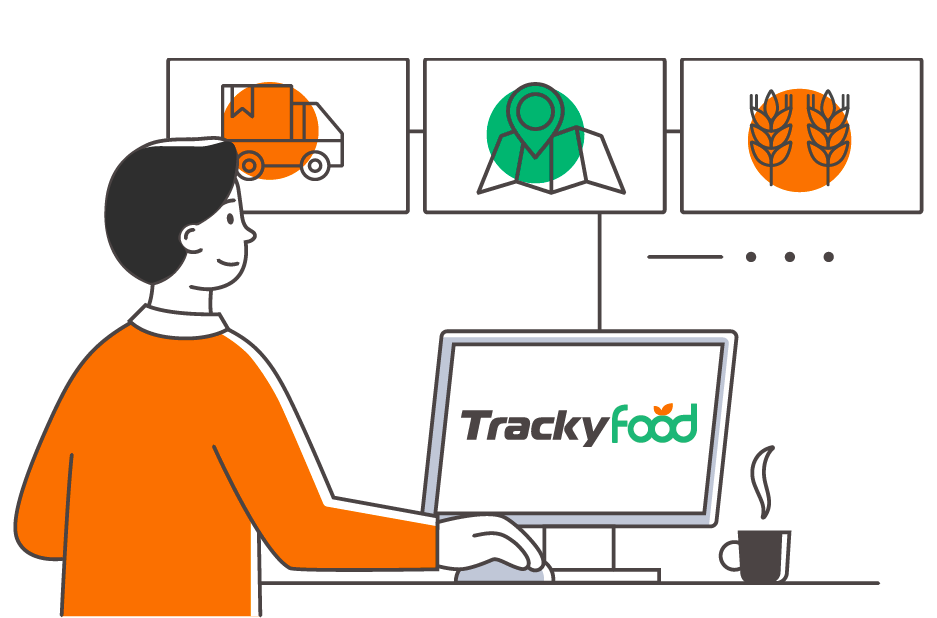
The platform Trackyfood confirms itself in 2026 as the reference for digital food traceability, with an ecosystem that combines traceability, automation and transparency.
✔ Real-time lot traceability
The page dedicated to traceability (trackyfood.com/tracciabilita) shows how to identify and monitor every incoming and outgoing lot, linking it to menu dishes.
✔ Blockchain to certify the supply chain
Essential to protect DOP, IGP and Made in Italy products: technology that allows certification of every phase of the food chain and counteracts fraud.
✔ Integration with predictive systems
Integration with kitchen management software, POS and AI systems allows advanced analysis that transforms the kitchen into a truly data-driven environment.
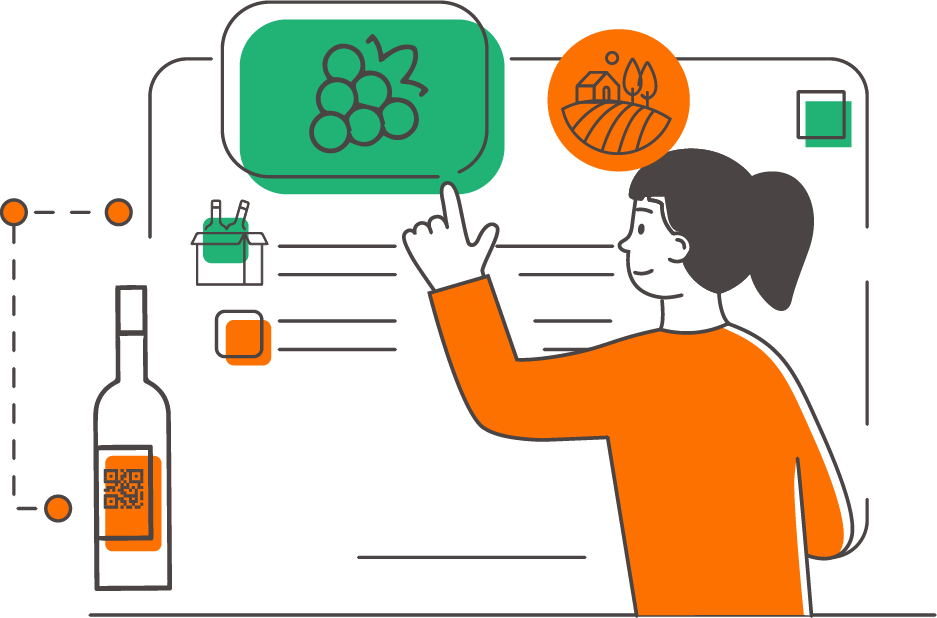
✔ Customer communication via QR code
More and more restaurants use QR codes to display origin, allergens, supply chain and certifications.
Trackyfood enables you to create this type of transparency instantly.
Traceability as an Anti-Waste Weapon in 2026
The fight against food waste remains one of the pivotal themes of the sector. Numerous studies and reports, such as those by Confcommercio and FIPE confirm that hospitality and waste are still too closely linked.
Digital traceability enables you to:
- identify the most critical lots;
- monitor expiration dates in real time;
- reduce unnecessary purchases;
- analyse which dishes generate the most waste;
- compare supplier performance.
In a context where sustainability becomes a metric of evaluation, in 2026 it’s not enough to reduce waste: you must measure and communicate it.
How to Prepare Your Restaurant for 2026 (5 Key Steps)
1. Digitise traceability
The first step is adopting a platform like Trackyfood: simple, scalable and designed for restaurants.
2. Map suppliers and critical products
2026 increases transparency demands on high-risk ingredients and certified products.
3. Link traceability, stock and sales
The power lies in combining the data: orders, sales, stock and lots.
4. Train the team
Technology works only if everyone uses it correctly and consistently.
5. Communicate your transparency
Use digital menus, QR codes and storytelling to help customers understand the value of your commitment.
Conclusion: 2026 Is the Breakthrough Year
The transformation of food traceability is no longer a future hypothesis: 2026 marks a turning point where digitalisation, European regulation and new customer expectations converge in one direction. Restaurants that choose today to adopt modern, integrated systems will be those that tomorrow can guarantee safety, transparency and sustainability without burdening internal processes.
Trackyfood was born for this: to make traceability simple, immediate and fully digital, offering restaurateurs and distributors a platform that combines control, automation and customer value.
Do you want to bring your venue to the level required by the new EU rules?
Learn how Trackyfood can help you digitise traceability and optimise ingredient management:
https://www.trackyfood.com/contatti
More news
Read the news we have selected for you. Lots of curiosities and information on the world of food.
The 5 Myths About Food Traceability
Food traceability has become an essential component of the mod..